Dame Caroline Dinenage MP: If authors can’t make a living, we will all be poorer
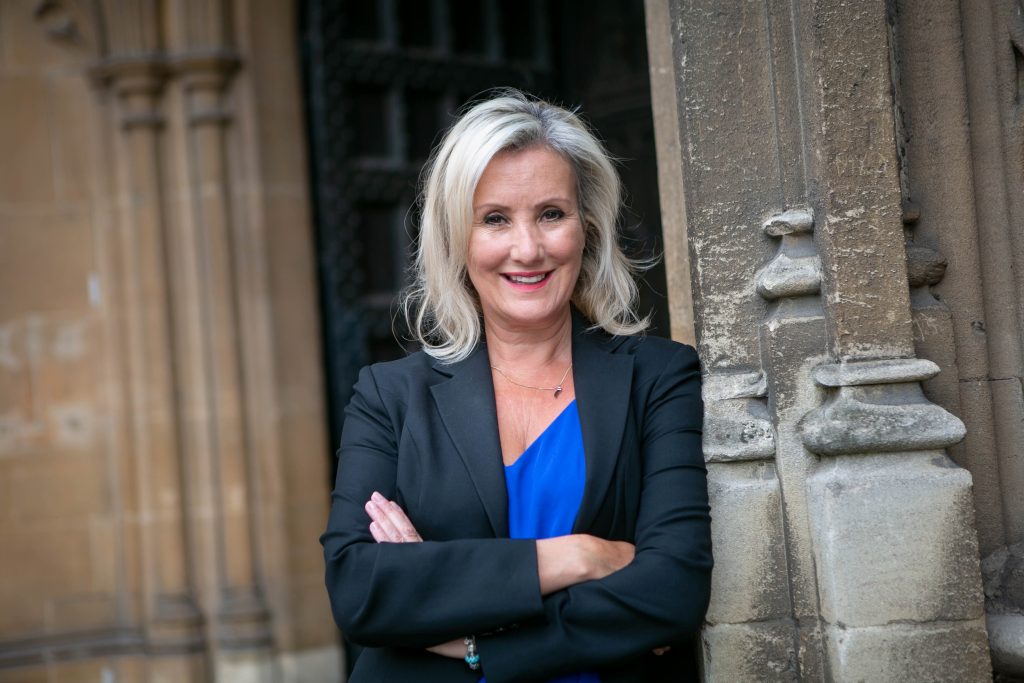
Dame Caroline Dinenage MP has become one of Parliament’s most prominent voices on creators’ rights, particularly around AI and copyright. We spoke to the Chair of the DCMS Committee about what Government needs to do next, the role of collective licensing, support for freelancers and why protecting creative careers matters for the future of the UK’s cultural industries.
You’ve been engaged with creators’ rights since your time as Culture Minister, and now as Chair of the DCMS Committee you’ve become one of Parliament’s most vocal advocates for creators, especially on the issue of AI and copyright. Why is this such an important area for you?
The role of the DCMS Committee is to hold the Government’s feet to the fire when it comes to the decisions that it makes on digital, culture, media and sport and to make sure that its policies are working for all. As Chair I’ve always wanted a central part of this to be standing up for and championing the fantastic creative industry sectors that we have in this country. The sheer depth and breadth of concerns about AI and copyright that we’ve heard from creators has been striking. And that’s not just from star name critics of the Government’s stance like Elton John and Paul McCartney or the many high-profile authors who have protested against how their creations are being used by the tech sector. We are there to support the interests of all those making a living in the creative industries at all levels, who are united by concerns that their hard work is being used without permission or proper compensation.
After the Government reset its plans on AI and copyright, following an unprecedented backlash, you said it felt like they were going back to square one. With new leadership in Government, what do you think they need to do differently?
It certainly feels like a case of going all the way back to the beginning and we are no further forward than we were two years ago. All the time the Government continues sitting on its hands in this area, the world of AI is rapidly pressing ahead with its development.
The UK can both preserve its gold standard copyright regime and enable its tech sector to grow. The early signs of licensing agreements between rights holders and AI companies are encouraging, but also show that, in the absence of any regulation, industry has been left to resolve this by itself. The Government is right to recognise that smaller, independent creators should not be overlooked as these partnerships take shape. Everyone who creates for a living, across our world-leading art, literature, music, and film and television sectors, should be fairly compensated for the use of their work and have control over how it is used.
We look forward to seeing how the Government’s thinking around licensing agreements develops under a new Prime Minister.
What role do you see for collective licensing organisations like ALCS in ensuring creators receive payments when their works are used by AI?
Organisations like ALCS are going to be absolutely key when establishing licensing markets that actually work. They have vast experience of ensuring that multiple parties across the creative industries retain the rights to their work and are paid fairly. Collective licensing is also going to be the best way of ensuring that smaller rightsholders and independent talent don’t get swallowed up and that they can be properly paid for their output.
You’ve called for much tougher transparency requirements on the data used to train AI models. Why is greater transparency so important, and what might this look like in practice?
Ultimately it all boils down to trust. For this to exist between authors, songwriters and artists and the AI companies who want to use their work, there needs to be transparency about what these firms are using and how they are using it. The Government has a role here in convening the tech sector and rightsholder groups to discuss the transparency measures that should be in place.
The Government has now appointed its Freelance Champions, an issue ALCS has campaigned for. What impact do you hope to see from the new role?
Highlighting the precarious employment conditions faced by many working in the creative industries has been a long-standing theme for the committee. In the last Parliament, the committee, which I also chaired, called for a freelance champion to ensure that there is someone standing up for the rights of freelancers, who make such a vital contribution across the creative sector.
It’s good to see that after a long wait the Government has finally appointed its first Freelance Champions. They have been tasked with supporting the industry’s response to the Good Work Review, which highlighted several workplace issues across the creative industries, and will also sit on a joint industry and government forum. It’s important that they hit the ground running and use the access they have to decision-makers to really press the case for supporting freelancers and ensure that they are treated with the respect they deserve.
I’m sure the committee will be keeping a close eye on their progress as part of our ongoing work on creatives’ employment rights and working conditions.
Your Committee recommended a private copying scheme, the Smart Fund, back in 2024. Such schemes are now operating in more than 50 countries around the world; why do you think the UK is still not one of them?
We’ve heard from the creative industries how requiring tech manufacturers to pay a small fraction of the value of each device they sell into a fund would help ensure that creators and performers are paid fairly for their work when it is accessed, distributed, and stored on digital devices. The lack of such a scheme in the UK not only prevents British creators from receiving payments from the domestic market, but it has also put their payments from abroad under threat due to a lack of reciprocity with other countries.
The Government hasn’t ruled out introducing a fund but has told us that the increased take-up of streaming services over the past decade may have led to an overall decline in private copying by individuals, and that it believes more research is needed on current user behaviour.
Public Lending Right is one of the few schemes that pays authors directly for use of their work, but the fund hasn’t grown meaningfully in years. Is it time for a rethink?
While this is not an issue the committee has looked at in detail, I understand the concerns of authors about the fund’s lack of growth, given its important role in ensuring they are properly paid whenever their work is used. There would seem to be questions about the size of the fund and its ability to support authors given the shift we have seen in borrowing habits in the digital age.
Your committee’s Creator Remuneration report echoed our own research that creators are struggling to make a living from their work. What do we risk losing as a society if the vast majority of people can no longer make a viable career from writing and other creative work?
We have an incredible literary tradition in this country that stretches from Shakespeare to the great contemporary authors of today. The tradition has been built on the principle that writers and creators have the right to benefit from their hard work. We undermine that principle at our peril.
If authors cannot make a living from their writing, many people, now and in the future, will be unable to pursue a career and we will all be poorer for the works that are never written. That is why it is so important that the Government gets this right. We need to both support the creators of today and safeguard the future creativity of the country. The value of great literature and creativity cannot be measured in purely economic terms. It contributes to the rich culture of our country.