Interview with Asli Jensen, Branford Boase winner
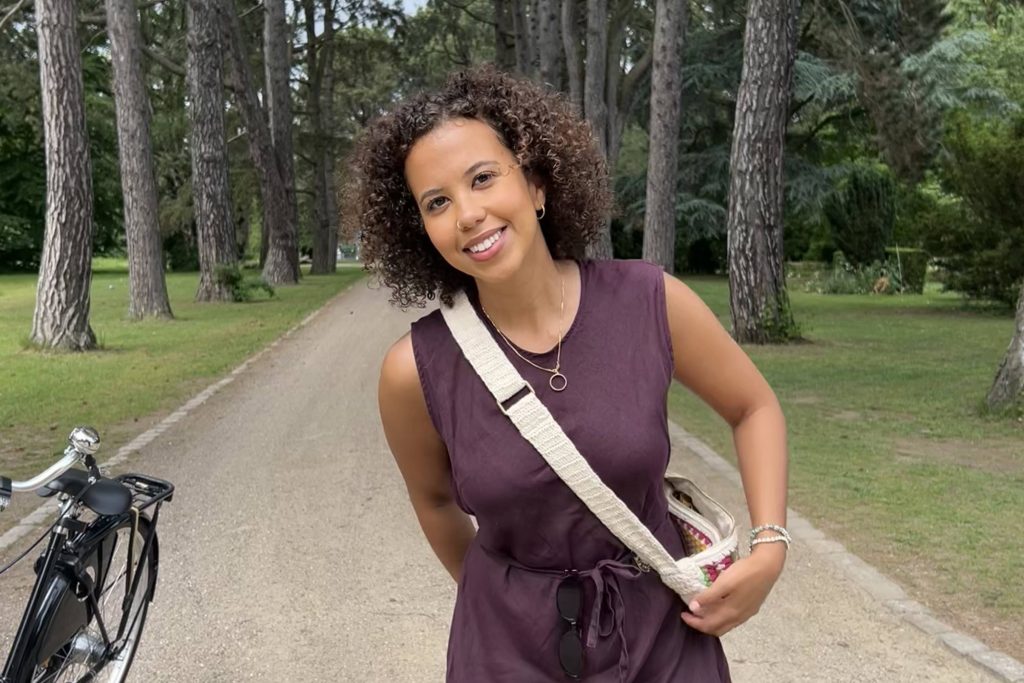
Asli Jensen won the 2026 Branford Boase Award for Love on Sight, her debut novel, which follows two teenagers from different cultural and religious backgrounds growing up on a London estate. The award, which uniquely recognises both a debut author and their editor, was shared with Jensen’s editor Shalini Vallepur. We spoke to Asli about the experiences that shaped the book, writing for young adults, working with her editor and what the award has meant to her.
Congratulations on winning the Branford Boase Award. What did it mean to have your debut novel recognised in this way?
Honestly, it just felt really validating for me because it was a really long journey to get my book published, and for so long I suffered from imposter syndrome. This award is obviously very prestigious, and I know some of the writers on the shortlist and the longlist, and they’re amazing writers. So, knowing that I was amongst such a high calibre of writers felt really good and really reassuring, but also really grounding. It was a really warming experience. And because the award is for me and Shalu, my editor, and she’s been there from the beginning, it was really nice that she’s also celebrated as part of this award.
I feel like I’ve always been confident in my writing ability, but I was never really confident that it would land with people. That was always the thing that bothered me the most. The fact that there was a judging panel, and there were young readers as well who told me how they saw the book, it was a really good feeling to know that it did actually land. I feel more confident moving forward that I do have a voice and there’s space for me to be heard.
You’ve spoken about growing up on a council estate and the positives of living in a diverse, tight-knit community. How has that experience influenced you as a writer?
I write from first-hand experience or second-hand experience, so it does underpin a lot of my writing. I think there’s so much stimuli growing up on the estate, so I constantly felt like there was so much to write about. I still live on an estate, so I also see it from an adult lens, which is helpful in writing as well. It’s a unique experience, but it really opened my mind to so much of the world because of the inherent diversity of living on an estate. That’s why I wanted to write a book that was cross-cultural, cross-religious, because I wanted those differences to be challenged.
After writing Love on Sight I do romanticise where I live a little bit more, just because it’s a teen love story and maybe I’ve got the rose-tinted glasses on quite a bit. But I think I’ve always gone through different emotions. Sometimes I feel like, ‘Oh, this is not the best place to live,’ and feel quite ambivalent towards it, but then sometimes I’m really in love with where I live. It feels like a roller coaster constantly. But after Love on Sight, I just wear it with pride now.
You were working in the youth justice system while writing the novel. How did that experience influence Love on Sight?
I started working in the youth justice service quite a few years ago, at the same time I started doing my master’s in creative writing, so I think it meshed really well. Working in the youth justice system taught me compassion because, growing up, I had peers in my class who ended up on the wrong path and, I’m not proud to say, I would just look at them and be like, “Why? There are so many of us that are willing to do well for ourselves, why are you so easily sidetracked?”
Working in the youth justice system, and growing up, I learnt the holistic picture because I was working with or managing young people, meeting their families, going to their family homes, talking to teachers, meeting with their social workers. I was involved in their lives, and when I saw the bigger picture, I realised I was very narrow-minded when I was younger because I didn’t understand what leads people into doing the wrong things.
That was something important for me to share in my book because it was also something I was learning at the time. That’s why, when I wrote Love on Sight, it’s not too heavy or too trauma-ridden. The characters go through something that might be a bit traumatic, but then they carry on, because as adults, when something bad happens, we carry on, and so do young people. But how we manage and navigate that is very different.
What drew you to writing for a young adult audience?
I’m 30 now and I started writing the book when I was 22. At 22, I hadn’t really had much life experience in my early twenties, but I had really reckoned with my teenage experiences and had understood what I went through, what my friends went through, and that whole period in my life. So naturally I think I gravitated to writing YA because I felt like I understood teens a lot at that point. As I approached 30, that became more of a challenge. When I was editing, I often had to ask my younger sister, “Does this make sense? Would you say this? Is this a thing?”
Is there a scene or passage in the book that feels especially personal to you?
There’s a letter in the book that Jalaal, who’s the male protagonist, receives from his dad, and his dad is pretty absent in his life. I think that letter is an ode to people who have had absent fathers in some capacity, even if it’s just for a period in their life, which I personally can relate to.
I think sometimes when parents in your life are perhaps not doing their best, hearing their words, their apology, their explanation, and their vulnerability, especially from a male figure, can do a lot of healing for a child. So, I think that was a very important part of the book, and very personal and emotional for me. When I talk to readers, people always talk about that letter.
Has there been a response from a reader that has particularly stayed with you?
I saw someone recently on TikTok who said that Sabrina’s (one of the protagonists) internal monologue is sometimes a little bit too harsh on herself. And it really made me stop and think, because I see so much of myself in Sabrina, and I do probably think I’m a bit too harsh on myself. That really stuck with me, and it’s making me reflect as a person, but also as an author, aabout how I will approach the internal monologue for my characters in the future.
YA romance is a crowded space. What do you think helped Love on Sight stand out and resonate with readers?
I think, or at least hope, there was a kind of rawness. I don’t really like the word authenticity because I’ve been hearing it a lot, but I think my book has that rawness. There were points where I was writing and I was like, ‘Should I add this?’ I was unsure, but I added it anyway. Even in the editorial process, Shalu at times would be like, ‘No, go even deeper with the dialect.’ And I was like, okay, I’m not holding back. I’m not trying to cater to a specific audience. I’m just going to write from what I know.
Even when I was creating the characters, Jalaal and Sabrina, in my head I would think, okay, Sabrina’s woken up in the morning. What would she do? She’d go do this, or she’d go do that. Jalaal, what would he do? I really tried to pin down these characters second by second and focus on the day-to-day of their lives. And maybe that’s why it stood out, because it feels real.
The Branford Boase Award uniquely recognises both the author and their editor. What was your experience of working with Shalini, and how did she influence the book?
I didn’t get my book published in the traditional way of going through an agent and then them going on submission. I won the Times/Chicken House competition, and Shalu was part of that process. That’s when Love on Sight first met her. Then I won the competition and she became my editor.
Throughout that whole process she’s been there right from the beginning, and she’s really championed me. Even in the editorial process, I would look forward to going through the edits. I loved hearing what she had to say. I think she gave a very honest perspective, and she knew the vision I had for the book. To be on the same page felt really good.
As someone for whom this is my first experience of publishing, it’s been really positive. Shalu’s my girl. I didn’t find it hard letting someone into the creative process. I just want my book to be the best that it can be. So, if I have other people giving input, I know my book is just going to get better.
What did the writing process look like for you? Did you have a particular routine?
No, it’s so crazy and sporadic. This is kind of sad, I’m not going to lie, but I think I write from a place of sadness or absence. When I don’t feel good, writing is my solace, so that’s when I’ll go and write. Obviously I’m not sad the whole year. I might be sad for a couple of months, especially when you have seasonal depression – that’s a good time to write. So I could write 50,000 words in three months and then I won’t touch it for seven. It’s just however I feel emotionally.
Are you working on another creative project?
I’m working on things and seeing where my heart is leading me. I think with publishing, what I’ve learned is there is this pressure to churn out books a little bit: you’ve done this, now let’s do the next one. My first book was based on my real-life experiences. I can’t just make that happen for me right now. I have to take time with it, and I’m okay with going against the grain, taking my time and seeing what happens. I trust the process and I’ll be patient. So yeah, I’m working on things and seeing how they transpire.