“Why is it only the writer who isn’t paid?” – Maggie Gee pays tribute to Maureen Duffy
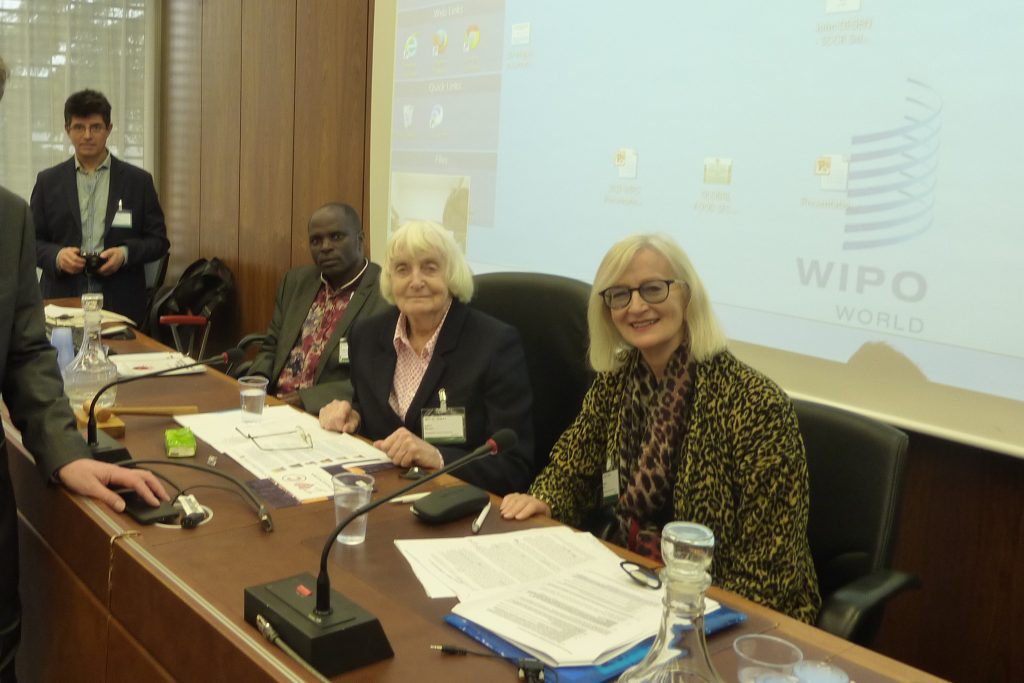
Novelist Maggie Gee OBE has published 17 pioneering books, served on the ALCS Board for nine years and was the first woman Chair of the Royal Society of Literature. She pays tribute to her mentor and friend Maureen Duffy, who died last month.
Maureen, who died on May 27 this year aged 92, was to all of us at ALCS, our champion and friend. She was the only surviving member of the group of five who founded the Writers’ Action Group (1972) which fought for Public Lending Right (1973-1979), and in 1977, set up ALCS. With her helmet of bobbed iron-grey hair, blue eyes that looked you full in the face, strong voice and deep, unillusioned two-note chuckle, she was a Joan of Arc figure, continuing to lead writers into battle even in her late 80s. As she said in an interview after winning the inaugural RSL Pioneer Prize last year, “I had been told writing was a profession and I shouldn’t expect to be paid for it… I thought ‘bugger that’”.
She was fearless, at least on the outside. She confessed that when she went with other PLR campaigners to the 1978 TUC conference, a “vast audience, full of miners and steelworkers”, it was “the most terrifying moment of my life.” But the Prime Minister had hinted that TUC endorsement would help get PLR through, so when a male librarian opposed it, she had the chutzpah to dash down to the podium, urged on by a steelworker: “Go on girl, give it to him!” She did. “You have to pay for the cleaners and the librarians… why is it only the writer who isn’t paid?”
Less known to our members may be her life beyond campaigning, an extraordinary path from an ‘illegitimate’ working-class childhood that effectively left her an orphan in her mid-teens, to a life-long career as a writer of over 50 works, poems, plays, novels, a pioneering biography of Aphra Behn, The Passionate Shepherdess (1977), all underpinned by the deep learning that led the Times Literary Supplement to call her a ‘recognised polymath’ when noting her death – she would have liked that. She wrote every morning, and is probably most widely thought of as a novelist, author of works like the ground-breaking The Microcosm (1966), set in a lesbian club, That’s How it Was (1962), her semi-autobiographical novel about a working-class wartime childhood, or Capital (1975), an astonishing fictional riff across centuries of history of London, but she began as a poet, and at heart always remained one.
Her father was Irish Catholic. She recounted in a poem how he claimed, when he left her Protestant mother Grace alone with two-month-old Maureen for good, that it was because he was in the IRA. Grace did not believe him. When imagining her father “in strange men on the bus” as a child, Maureen would cope by saying in her head, “we don’t need you.” But then she tells how a conversation 80 years later with a taxi driver from Sligo – “Jesus, you can’t marry a Prod while you’re in the army” – salved the childhood hurt; maybe her father’s story had been true after all!
She had to learn more lessons in the school of hard knocks after her beloved mother died of TB. Maureen was 15. Only the belief of a kind schoolteacher, who effectively fostered her, got her to A-levels and a place to read English at King’s College, London – King’s now proudly feature a huge black-and-white portrait of Duffy on their exterior wall in the Strand, alongside Virginia Woolf and Florence Nightingale. At Kings she fell in love with the Old English poetry whose rhythms and laments run through her work, especially the final volumes beautifully published as decorated, illustrated books by The Pottery Press, Past Present: Piers Plowless and Sir Orfeo (2017) and Wanderer (2020).
Because she loved women and came out as a lesbian on British TV’s Late Night Lineup on June 14, 1967, before homosexuality was decriminalised, because she wrote frankly about her working-class origins and campaigned for writers and animals, her writing can too easily be reduced to its causes. But the reader of poetry collections like Family Values (Enitharmon, 2008) or Pictures from an Exhibition (Enitharmon, 2016) will find music, humour, wisdom and craft under a surface clear as glass. She writes about European art and Italian gardens, classical myths, beetles and birds, Latin poetry and London family slang whose salty beauty she blends into her own literary rhythms. And she writes peerlessly about love. Among her real-life loves ended by death or time were writers Brigid Brophy and Georgina Hammick, with whom she lived for many years, but as a poet, she wrote as an erotic lover well into old age (Paper Wings, Pottery Press, 2014).
Long having admired her writing, when I was invited to appear alongside her at a literary festival in the 1980s, I decided “better if I interview her.” After that she remained a friend and mentor. Ten years ago she invited herself to lunch at our Ramsgate house and suggested that I stand for election to the ALCS Board. But we were eating in the garden and soon she was noticing the red penstemons just starting to flower and talking about Chaucer, who we both loved. I stayed on the Board for nine years. Her comment about the time she spent campaigning rather than writing, made with a chuckle, was “I never left the working class, did I? Because I’m still working for writers.” Thank God she did.