An update on AI and licensing
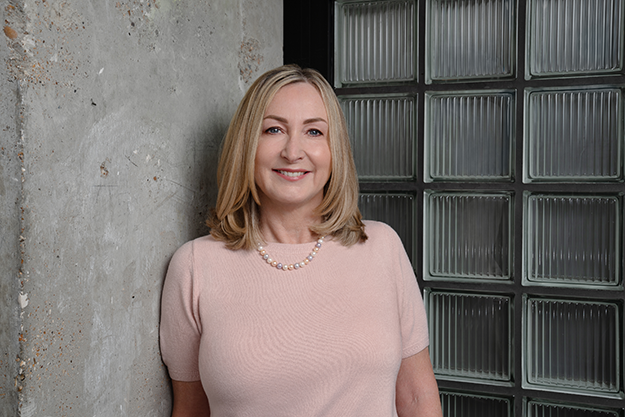
ALCS Chief Executive Barbara Hayes discusses the latest as we seek to develop a licensing mechanism to pay members when their work is used to train AI.
Although much remains uncertain, the outlook for rightsholders is currently more positive than when I last updated you on generative AI in November. Since then, the Government finally provided an update on its thinking after the “unprecedented” response to its consultation on AI and copyright. It announced that it no longer viewed a broad copyright exception as its preferred choice and acknowledged the need for creators to be paid fairly for the use of their work. To this end, it would “take steps to help creators control and license their work”.
While it is very welcome that the Government has stepped away from its original approach, which would have firmly prioritised the needs of the tech sector, to the detriment of the creative sector (which remains one of the fastest-growing and successful sectors in the UK), we still have a challenge ahead of us. We need to develop a dynamic licensing market, where AI companies can access the works needed to train their models, while creators retain control over their work and are paid fairly for such uses.
Earlier this month, in its response to the Communications and Digital Committee’s report on AI, the Government affirmed that, without an exception, AI companies must obtain a licence to use works to train their models. However, it said it would not intervene in the licensing market at this stage, and would instead wait and see how such markets develop. We are eager to demonstrate to Government, industry and rightsholders that a flourishing licensing market represents an effective and fair path forward.
As we announced at our AGM in November, and in my blog the same month, we have been working with our partners at the Copyright Licensing Agency (CLA) and Publishers’ Licensing Services (PLS) in developing a licence for AI training. This would allow us to collect and pay out money where written works are used by AI companies to augment, fine-tune and train their models, with an initial focus on professional content in areas like business and academia.
The first stage of this licence was launched by PLS at the London Book Fair in March. We know from our 2024 survey that generative AI is a topic creators have strong feelings about and that there are a wide range of views held across our membership. In response to what you, our members, told us, we are putting choice and control at the heart of our approach. ALCS members whose publishers have signed up for the licence will be invited to set their own preferences on which, if any, of their works they want to include in the scheme.
We’ll be contacting the relevant members by email informing them that their publisher has opted in to the licence and inviting them to do the same. They will be directed to log in to the Members’ Area, where they will be able to opt in on a work-by-work basis or for the entirety of their repertoire. We’re working to make this as straightforward as possible for participating members, so we will provide detailed instructions, including a video tutorial outlining what you need to do. We anticipate that we’ll be starting this work towards the end of June, but we’ll ensure that we keep you updated in ALCS News and on our social media channels, so please do keep an eye out for further features.
As we are at the development stage of this licence, we cannot yet assess the financial benefits for our members, but we are aware of keen interest in the market for this licence. If your publisher has opted in, then you have a decision to make and if you have an agent, or are a member of a writers’ union, you may wish to consult with them to discuss your options before making that choice.
Please note that this licence is separate from the “workplace permissions” that have been included in CLA licences since May 2025 (and for which many of you will have now received your first payments), which allows organisations to use works when prompting AI tools.
We are pursuing this licence because we strongly believe that collective licensing is the best route to ensuring that rightsholders have control, choice and the option of fair payment in the age of AI. We believe this is a view shared by a large proportion of our membership too. In our survey of members on AI, 96% of respondents wanted to be paid if their works had been used to train AI, with 81% saying they would be happy to support an AI licence if ALCS were able to secure one.
We are determined to provide a fair and transparent option for those members who wish to secure payment for this new use of their works. We will continue to work closely with our partners and ensure that our founding principle “no use without payment” remains as true in the digital age as it did in 1977, when ALCS was first created to accept photocopying monies from abroad.
Barbara Hayes
Chief Executive, ALCS